
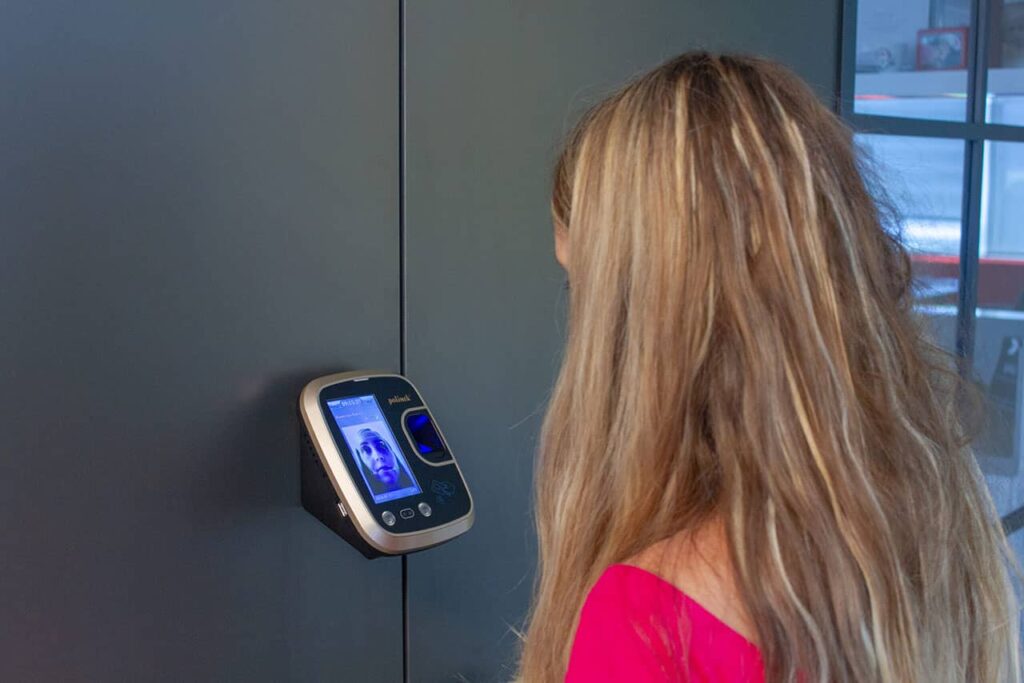
With the rapid advancement of technology, security systems are undergoing a profound transformation. Traditional methods such as physical keys, magnetic cards, and fingerprint readers are being replaced by faster, more secure, and contactless solutions. One of the most prominent technologies in this transformation is facial recognition systems.
Facial recognition technology is an advanced biometric system that verifies identity by analyzing facial features, using artificial intelligence and image processing algorithms. In addition to ensuring the security of personal data, it also offers hygiene and comfort through its contactless nature. Today, it is actively used in many areas, particularly at the entrances of institutions.
In this article, we will examine in detail how facial recognition systems work, the areas in which they are used, and the advantages they offer to institutions.
- What Are Facial Recognition Systems and How Do They Work?
Facial recognition systems are technologies that use biometric data to verify a person’s identity based on data taken from their face. These systems digitally analyze the unique facial structure of an individual. Fixed features such as the position of the eyes, nose shape, jawline, and forehead width are converted into mathematical data by the system.
How Facial Recognition Devices Work
Facial recognition devices first scan the user’s face using high-resolution cameras. The system then analyzes the image through algorithms and creates a facial map of the individual. This map includes biometric metrics such as the distance between the eyes and the distance from the tip of the nose to the chin.
Access is granted after matching the captured data with the registered faces in the database. The process is completed in just a few seconds. Some advanced systems use 3D recognition technology, which evaluates depth information of the face, offering higher accuracy against changes in light, shadow, and angle.
In addition, features like liveness detection ensure that the system can detect whether the person is actually present, preventing attempts to fool the system with photos, videos, or masks. This is a critical feature for areas requiring high-level security.
With software support, facial recognition systems can also manage real-time entry-exit tracking, time control, and authorization functions. Thus, they serve not only as a verification device but also as a control and analysis center.
- Areas of Use
The flexible and secure structure of facial recognition systems makes them a preferred choice in many sectors and scenarios. Here are the most common application areas:
Corporate Buildings and Offices
Used to track employee entry and exit, control visitors, and allow authorized access to restricted areas. When integrated with time control systems, processes like attendance and shift tracking are automated.
Production Facilities and Factories
In industrial facilities with high entry-exit security, only authorized personnel can access production areas. These systems also simplify shift scheduling and break time monitoring.
Educational Institutions
Facial recognition technology automatically records the entry and exit times of teachers and administrative staff, ensuring accurate payroll and work hour calculations.
Only registered personnel are granted access to the school building, preventing unauthorized entry and thereby increasing student safety. School management can monitor real-time working hours of staff and generate reports when needed. These systems can also be used for access control in areas such as guidance offices, cafeterias, and libraries.
Healthcare Institutions
Hospitals and clinics use these systems to control access for both staff and patients. Only authorized individuals can enter special areas such as intensive care units and operating rooms.
Hotels and Tourism Facilities
Facial recognition systems are used in hotels and tourism facilities primarily for personnel management and restricted area access control. Staff in different departments like reception, housekeeping, technical services, and kitchen can only enter the areas they are authorized to access.
This enables monitoring of personnel movement, ensuring both security and operational discipline. Entry and exit tracking also helps monitor shifts and detect delays or violations instantly. Without the need for carrying cards or remembering passwords, it offers a practical and fast solution for employees.
Airports and Terminals
In high-traffic environments such as airports and terminals, secure and rapid access systems are of great importance. At Polimek, the facial recognition systems we have developed provide 99.7% recognition accuracy, offering maximum security and efficiency in these critical locations.
Public Institutions and Municipalities
Commonly used in public service buildings for crowd management, staff tracking, and access control to restricted areas.
- Advantages
Facial recognition systems not only enhance security but also improve operational efficiency. Here are the main advantages:
Contactless and Hygienic Use
As devices do not require physical contact, the risk of bacteria and virus transmission is eliminated. This is especially valuable in the healthcare sector and public spaces.
Fast and Efficient Verification
Recognition time can be as low as 0.2 seconds, ensuring smooth passage even during peak hours.
High Level of Security
Facial biometrics are unique to each individual and very difficult to replicate. Advanced features such as liveness detection and 3D recognition prevent unauthorized access.
Integration Capability
They can be integrated with turnstile systems, door locks, elevator control units, and time control systems, allowing the creation of a customized access network for the business.
Ease of Management
User permissions, entry times, and area-based access rights can all be easily defined and reported through centralized software.
No More Card or Password Problems
Eliminates the need to carry access cards or remember passwords, increasing user comfort and reducing operational costs for the business.
Scalability and Compatibility
Facial recognition systems can be easily adapted to growing businesses. User capacity can be expanded and new devices can be integrated into new areas.
Conclusion
Facial recognition systems are not just access control tools—they are comprehensive security and management solutions. Especially in high-traffic and high-security environments, they offer significant advantages to both businesses and individuals.
With advanced verification algorithms, liveness detection, integrated system support, and user-friendly interfaces, facial recognition technologies take access security to a whole new level. Their contactless and rapid nature combines hygiene with convenience, and these systems are expected to become even more widespread in the near future.
At Polimek Electronics, we provide the most up-to-date and secure facial recognition solutions, supporting organizations in their digital transformation. To discover the technology of the future and elevate your business to a higher level of security, feel free to contact us.